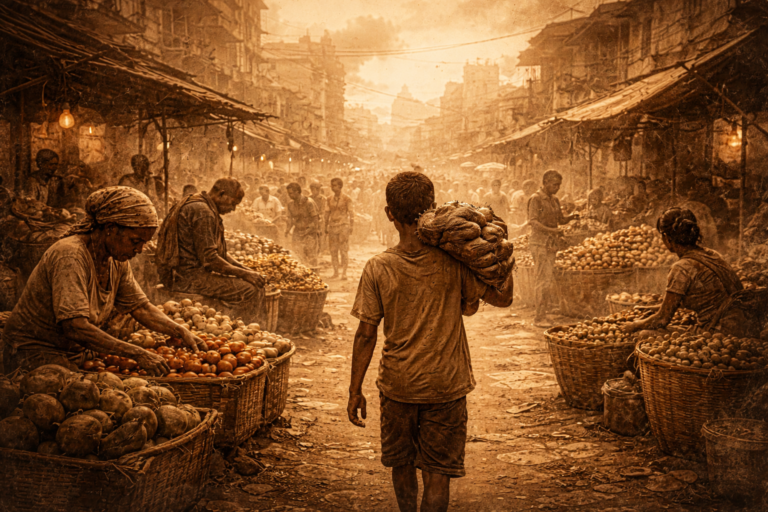
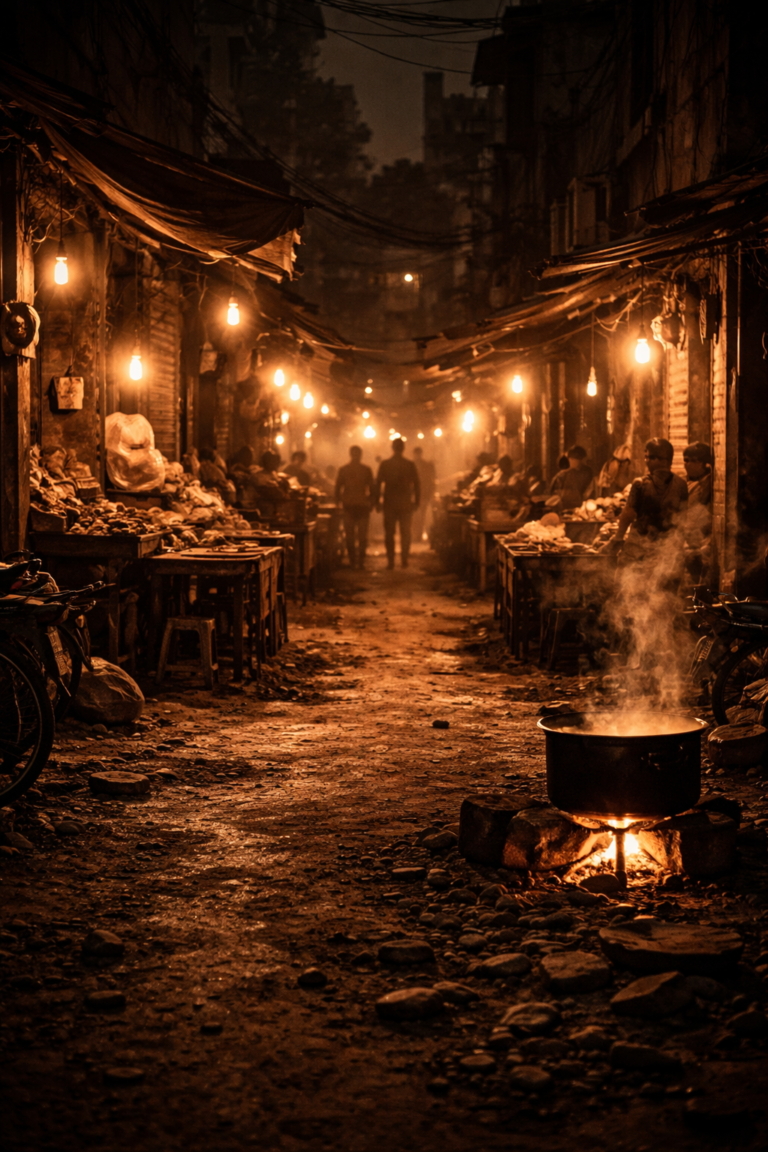
Money is a tool, not the only one. Yet society measures worth almost entirely in its presence, as if absence equals failure. In reality, lives are maintained, communities function, and survival continues in countless ways that never appear on a ledger. There is an economy built on favors, on trust, on human exchange, that often goes unnoticed by those outside it. It is a quiet system, complex and adaptive, and it operates alongside capitalism, not against it.
In poverty, people become skilled in this economy. A borrowed hand, a shared meal, a word of advice, a ride to a distant market—these are currency. They carry weight and consequence. The value is relational: who can give, who can receive, and how does reciprocity flow? Missing a promise or forgetting a favor can fracture connections, yet fulfilling them strengthens bonds that money alone could never maintain. In a place where resources are scarce, these exchanges are not optional—they are survival.
And then there are those who step outside, voluntarily. They reject the traditional system, choosing minimalism, barter, or alternative communities. They are not poor in the same sense, but their exclusion from mainstream economy looks the same to outsiders. The lesson is subtle: wealth and poverty are not just financial—they are relational, mental, and ethical. Money is a tool, but one among many. It does not dictate human ingenuity, courage, or endurance.
Yet even in systems where money is present, survival relies on skill, knowledge, and mental resilience. Poverty is not merely the absence of currency—it is the daily negotiation with scarcity, uncertainty, and limitation. It is making decisions that would never occur to someone with abundance, stretching energy, time, and trust across multiple needs at once. It is learning to act with courage when every option carries risk, when every small choice can ripple into consequences larger than the day itself.
The economy of favors is also moral. It asks people to evaluate trust, generosity, and obligation constantly. Who deserves help? How much can one give before it becomes unsustainable? When is reciprocity owed, and when is it impossible? These are daily questions, shaping character, community, and strategy. They require awareness, observation, and judgment, as much as courage requires endurance and patience requires hope.
Ultimately, these systems remind us that human life is not reducible to currency. Money is a measure, a medium, a tool—but it is not the only one. Knowledge, experience, courage, empathy, and reliability have value too, sometimes far more than the sum of coins. The economy of favors is not idealistic—it is practical, necessary, and adaptive. It sustains bodies, minds, and communities in ways that are invisible to anyone who only sees dollars and cents.
And perhaps the most important lesson is this: survival, ingenuity, and human connection are currencies that never depreciate. The economy of favors teaches patience, humility, and insight. It shows how people navigate systems they did not create, how they balance scarcity and need, how they negotiate trust and obligation. It reminds us that value exists everywhere, even where money does not, and that living fully does not require wealth, only attention, care, and courage.
📝 Text Signal from Inktales
Sometimes a new story appears.
Subscribe to receive a short signal when a new post is live.
No schedules. No extra mail. Only when something is new.
Quietly, you’ll be notified when a new thought appears.