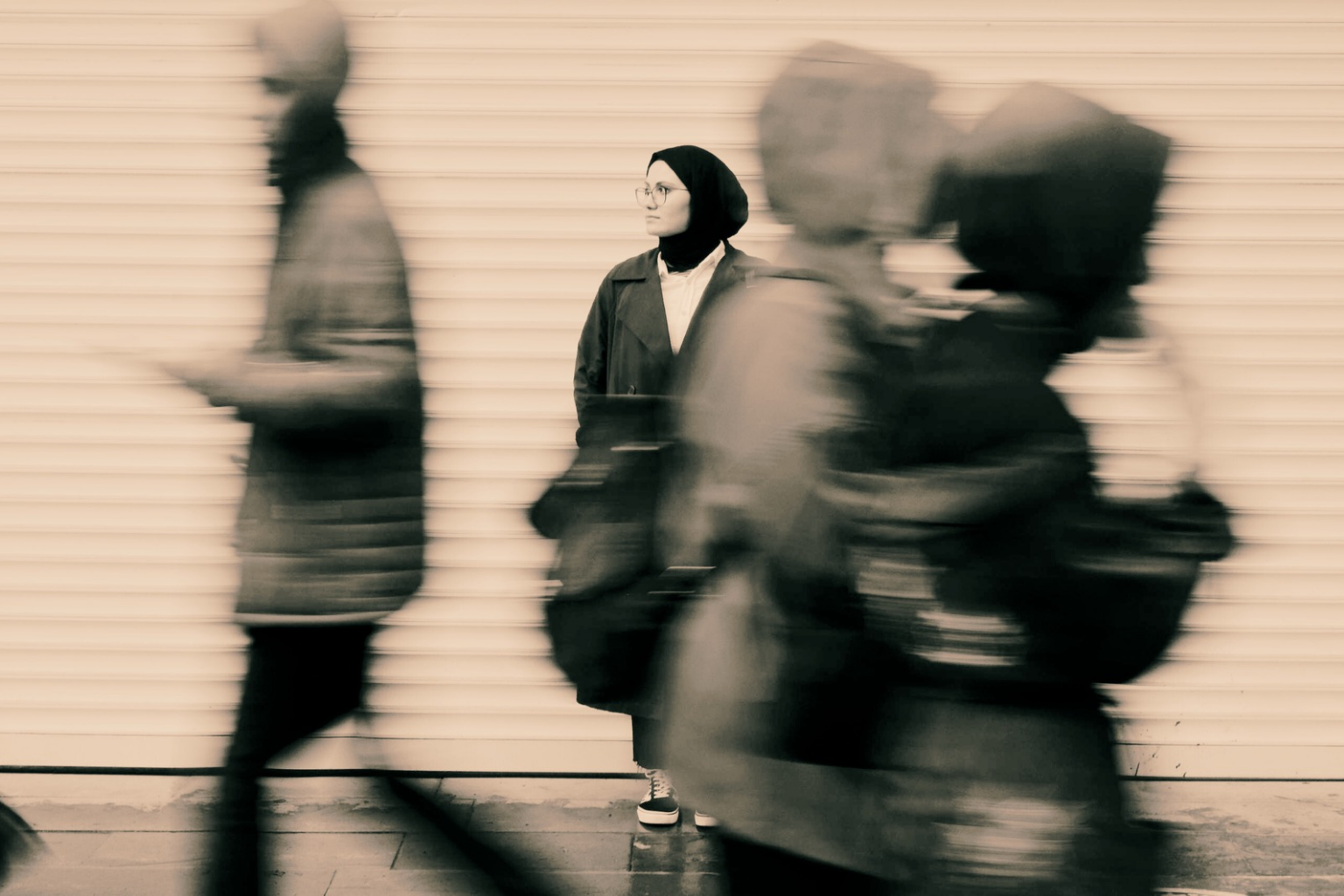
Normality as a quiet agreement, not a natural law
There is something quietly inconsistent about what we call normal.
Not loud. Not obvious. But present in small reactions, quick judgments, and unexamined assumptions.
More Inspiration for You
* Amazon Affiliate Links


Often, we don’t even notice it happening.
A person relocates across borders for work — this is considered responsible. Practical. Even admirable.
Another person moves just as far, without a contract or clear explanation — and suddenly the tone shifts. Questions appear. Concerns. Warnings.
The movement is the same.
Only the meaning changes.
This pattern appears everywhere, not only in moments of risk or instability.
Imagine a room with one hundred people. Ninety-nine have brown eyes. One has blue.
Nothing is wrong with blue eyes. Nothing is unsafe. Nothing needs correction.
And yet, the difference stands out.
Not because it matters — but because it deviates.
Normality is often nothing more than the majority made invisible.
We rarely question it. We simply absorb it. And once absorbed, it begins to guide our interpretations.
The same scene, observed by different people, can quietly trigger completely different conclusions — without anyone consciously questioning their own thinking.
One person sees stability. Another sees stagnation.
One sees freedom. Another sees irresponsibility.
One sees courage. Another sees avoidance.
None of these reactions are neutral.
They are shaped by agreements we rarely remember agreeing to.
“Normality” is a silent consensus, not a natural law.
It tells us what needs explanation — and what doesn’t.
What feels reassuring — and what feels suspicious.
What is allowed to exist without justification — and what must constantly defend itself.
This is why intention matters so much in how we judge the same behavior.
When actions fit into familiar structures — professions, roles, expectations — they feel legible. Safe. Contained.
When the same actions occur outside those structures, they become uncomfortable.
Not because they are dangerous.
But because they resist categorization.
We are not disturbed by difference itself.
We are disturbed by difference that cannot be easily explained.
This is where contradiction lives.
We praise individuality — until it becomes inconvenient.
We admire freedom — as long as it resembles choices we would make ourselves.
We value responsibility — often confusing it with predictability.
And so we judge.
Not always harshly. Often quietly. Internally. Almost kindly.
Yet these quiet judgments shape how people are seen, trusted, and allowed to exist.
To move differently, live differently, or choose differently is not inherently radical.
It simply falls outside what has been collectively agreed upon.
And perhaps that is why certain lives feel difficult to explain — not because they are wrong, but because they refuse to align with the invisible template of “normal.”
Normality is not fixed.
It shifts with numbers, context, and comfort.
What we call normal today would have seemed strange in another time, another place, another room.
The question is not whether we judge.
We all do.
The quieter question is whether we notice when we do.
📝 Text Signal from Inktales
Sometimes a new story appears.
Subscribe to receive a short signal when a new post is live.
No schedules. No extra mail. Only when something is new.
Quietly, you’ll be notified when a new thought appears.