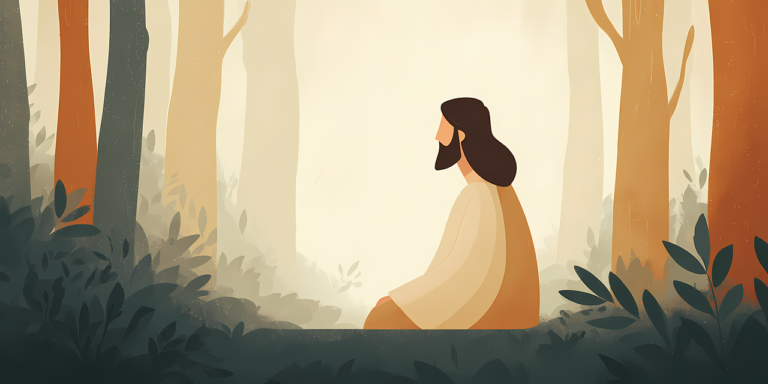
There are people who never break down. Who always function. Who show up for others even when things aren’t going well for themselves. Who answer “How are you?” with “Fine” — and aren’t even trying to lie, they simply refuse to allow any other answer.
That sounds like strength. Often it’s exhaustion dressed up as strength.
More Inspiration for You
* Amazon Affiliate Links



Where This Demand Comes From
The compulsion to always be strong rarely comes from overconfidence. It comes from experience:
- A childhood where weakness wasn’t safe: Where crying was treated as drama and you learned you had to rely on yourself.
- The role of the “Strong One”: In the family or friend group, you became the person others call when things fall apart, until you no longer know who you are without that role.
- The fear of being a burden: Those who too often sensed others’ needs learn to make their own invisible.
What This Compulsion Prevents
Always having to be strong prevents the most essential thing: being seen.
Those who never show vulnerability never receive genuine support. Not because no one would help — but because no one knows that help is needed. It also prevents real closeness. Connection forms in vulnerability — in the moment when two people show each other what’s actually true.
What Slowly Becomes Possible
Being strong isn’t the problem. The inability to also allow weakness is.
The first step is noticing that you’re carrying this facade. Not with shame — but with curiosity. When did it begin? What purpose does it still serve? And then, carefully: showing one person that things are hard right now. Not everything. Just one crack. Usually, nothing falls apart.
📝 Text Signal from Inktales
Sometimes a new story appears.
Subscribe to receive a short signal when a new post is live.
No schedules. No extra mail. Only when something is new.
Quietly, you’ll be notified when a new thought appears.